
Crit: Thursday 28th January 2021
- Kieran Collins

- Jan 20, 2021
- 10 min read
Updated: Jan 25, 2021

Project:
I have been spending the past two years collecting orphan albums and photographs. I am now a proud owner of a collection of 1550 orphan photographs. over the past two years I have been trying to understand why the album and old family photographs are becoming part of the throw away culture. I have also been researching how old family photography and albums are key to understanding one’s own identity and the identity of the family, history, memory and narrative. Photography is often linked to memory. The relationship between them appears to be both intuitive and essentially contested. ‘we speak of images or snapshots of the past when we recreate memories, call especially vivid recollections “flashbulb memories” and recreate elements of the past in the mind’s eye’ (Shevchenko, 2014, p.3).
Throughout the current months, I have been concerned around the ideas of public and private. From looking and spending time with my collection I have understood that to understand their accurate identity I must look at the photographs with great detail and describe what I see. I have recently tried researching if I can find out who these people are in the photograph by asking the sellers, questions such as where did you get the photograph from? Do you know anything about the people in the photograph? all of the answers I have received from the sellers are all the same they do not know them.
Orphan Album 2020 is a project which is a response to John Berger’s quote ‘Yet, unlike memory, photographs do not in themselves preserve meaning. They offer appearances – with all the credibility and gravity we normally lend to appearances- prised away from their meaning. Meaning in the result of understanding functions. “And functioning takes place in time and must be explained in time. Only that which narrates can make us understand.” Photographs preserve instant appearances. (Berger,2013,p.55)
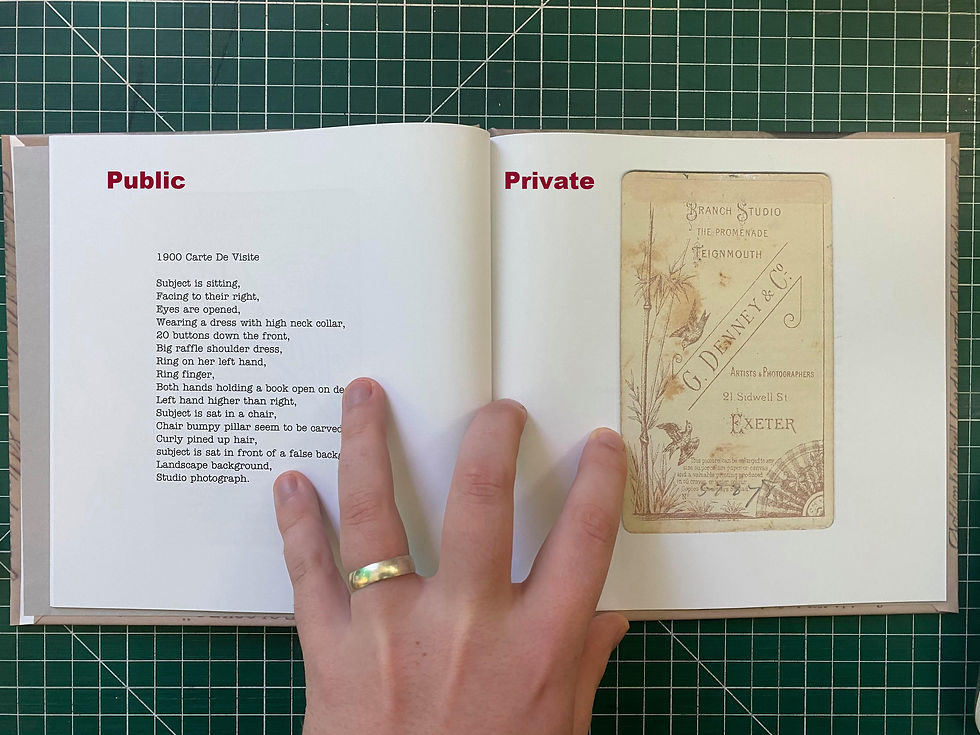
As I don’t understand these stories the only way, I can portray their accurate narrative and identity Is that I must describe the subject within the image. Berger says in one of his books there are photographs for public and photographs which are private which are family photography. As a result, to this the image is faced down, removed or edited (privet), and my dissemination of the picture is juxtaposed opposite (Identity). As the audience reads my own encounter, they build their own image in their own mind. Which becomes there’s to keep.
Uses of Photography?
The essential purpose of photography is documentation and communication. ‘Photography has profoundly disturbed the balance between verbally and visually transmitted information’ (Hiley, 1983, p.21) these forms of communication are for information, discovering, recording, entertainment and self-expression. ‘Pictures are a photographer's means of expression as a writer's means are words’ (Purbaya, 2019).
Its wasn’t until the 20th century and the period between the two world wars that the photograph became more dominant. It was the most natural way of referring to appearances. ‘Photographs are perhaps the most mysterious of all the objects that make up and thicken the environment we recognise as modern. Photographs really are experience captured, and the camera id the ideal arm of consciousness in its acquisitive mood’ (Berger,1980, p.53). In its first period of its existence photography offered a new technical opportunity.
‘A photograph is not a rendering, an imitation or an interpretation of its subject, but actually a trace of it. (Berger,1980, p.54). A photograph is like a death mask or a footprint. The camera has been used as an instrument to contribute to a living memory. The photograph is a memento from a life being lived. The camera lens and the eye both register images because their sensitivity to light. The camera dose what the eye in itself can never do is to fix the appearance of that event. The camera removes its appearance from the flow of the appearance, and it preserves it, not perhaps forever but as long as the film exists.
There’s always been a great discussion about photography and memory. Can an image capture a memory or contributes to memory? Photography is often linked to memory. The relationship between them appears to be both intuitive and essentially contested. ‘we speak of images or snapshots of the past when we recreate memories, call especially vivid recollections “flashbulb memories” and recreate elements of the past in the mind’s eye’ (Shevchenko, 2014, p.3).
Yet, unlike memory, photographs do not in themselves preserve meaning. They offer appearances – with all the credibility and gravity we normally lend to appearances- prised away from their meaning. Meaning in the result of understanding functions. “And functioning takes place in time and must be explained in time. Only that which narrates can make us understand.” Photographs preserve instant appearances. (Berger,1980, p.55) Meaning which if you were a part of the function you know the narrative and memory. If you weren’t a part of the function you do not know the narrative or memory of the image.
‘We must now distinguish between two quite distinct uses of photography. There are photographs which belong to privet experience and there are those which are used publicly. The private photograph- the portrait of a mother, a picture of a daughter, a group photo of one’s own team – is appreciated and read in a context which is continuous with that from which the camera removed it’. (Berger,1980, p.55) private photographs are read in a domestic context.
Public photographs contribute to a memory, the context or form of this memory is social memory (History). ‘History is an extension of memory or a form of memory’ (Cubitt,2007, p.31). History is a working memory of the society which helps us learn about ourselves and where we come from culturally not personally. ‘History differs from memory not only in how knowledge for the past is acquired and validated but also in how it is transmitted, preserved and altered.’(Cubitt,2007,p.31) ‘Memory of an unknowable and total stranger. The violence is expressed in that strangeness. It records an instant sight about which this stranger has shouted: look! Who is the stranger? One might answer: the photographer. Yet if one considers the entire use-system of photographed images, the answer of “the photographer” is clearly inadequate. Nor can one reply: those who use the photographs. it because the photograph carry no certain meaning in themselves, because they are like images in the memory if a total stranger, that they lend themselves to any use’. (Berger,1980, p.56 and 57)
Understanding, Describing image?


From interviewing Deborah Watson, a self-employed researcher and freelance archivist last year she gave me a lot of useful guides and tips into how I can identify the individual. Deborah also spoke about how I can use archives and research methods to find narrative and history in orphan photographs (found discarded family photography) with no annotations.With my collection of 1500 orphan family photography, I should use an affective magnifying glass and look at the clothing on the subject and also look at what is around the subject. For example, Broches, name badges, names on shop signs, names on bouts and street signs.

Understanding, Describing image Book:
Book 2. Album of the Orphans:




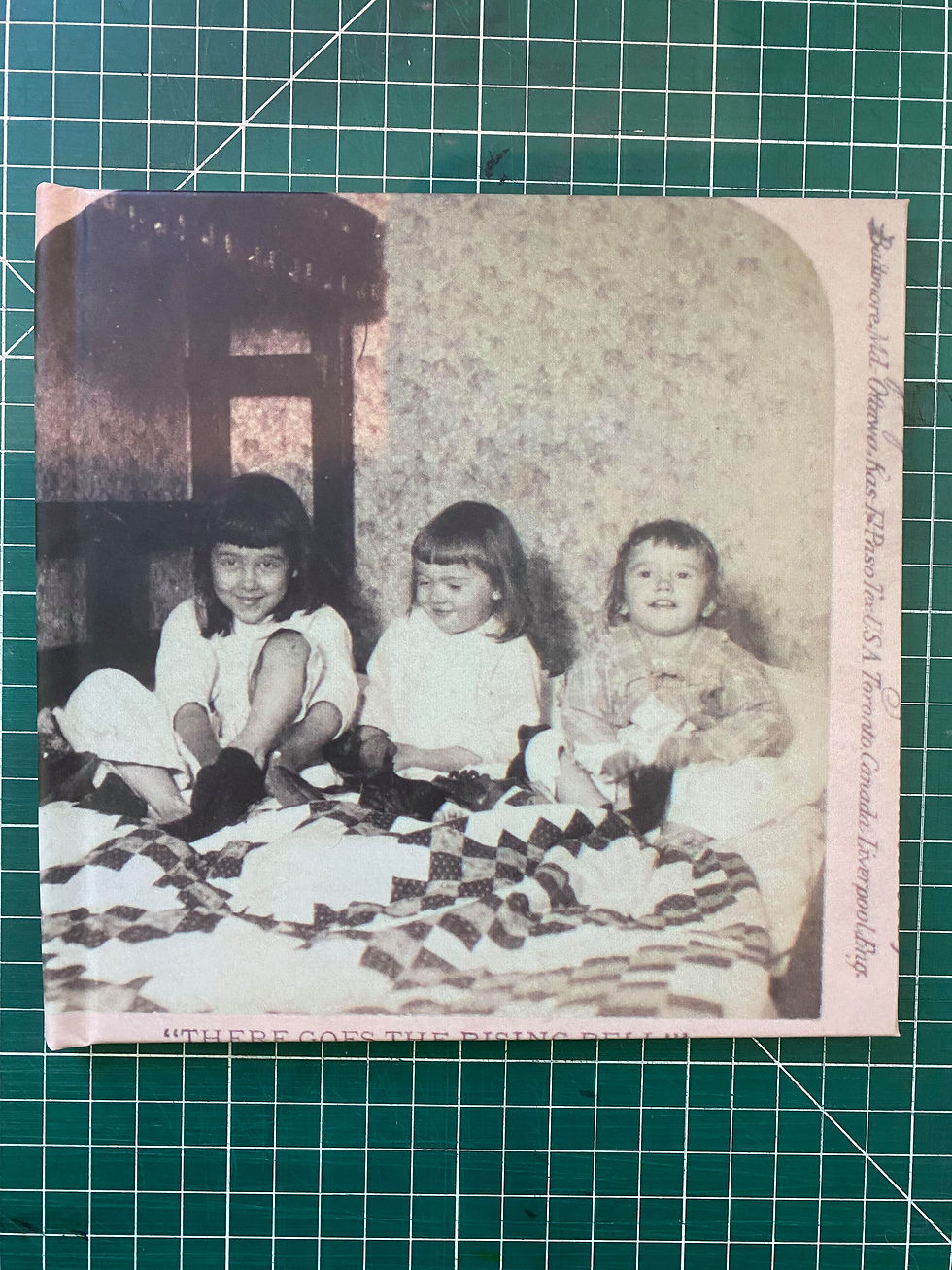
Thinking of new ways of displaying the text. Carte de visite photographs would be displayed in the photographic album. The photographic album was produced for the encouragement of taking and collecting photographs, ‘the first album was produced in France, but they were available in Britain as early as the summer of 1861’ (Shrimpton, 2011, p.109). As the neat Carte de visite photograph became fashionable, inspiring the ‘cartomania’ craze, so the first purpose-designed photographic albums. The relationship between photographic prints and displaying them in the new album became a popular fashion in the early 1860’s. The album was designed to look like the family’s traditional bible. Early albums were stout volumes with heavy embossed leather and metal clasps. Pages within the album may be decorated with flowers etc. The pages for the photographs are usually cream with printed thin gold lines and borders and corner designs, the early 1860s photo mounting is cut square at the bottom and curved at the top (8.4cm x 5.1cm) and the later ones (mid 1860s) may alternate with an oval cut mount.
This new book Album of the Orphans was designed to look like the family traditional album. Pages within the book are scans of Victorian pages. Instead of placing the images within them they are replaced with the text. Writing about the images I wanted to place them in context in where they would originally be.


Album of the Orphans pages:








Image To sound:
From experimenting in ways of writing about the image it led me to think of new methodologies of how the image can say its own function. I feel like by myself writing about what I see I was still not let the image speak for itself. Converting the image to sound was an interesting avenue to take. The image could speak for itself and tell is own function, memory and identity.
Public is the sound, image is pixelated for private
Next chapter:
From exploring ways of writing about the image and then converting the image into sound. It has raised a series of questions and thoughts. Over the past few years, I have made work that was inspired by my family album and questioning my album to understand identity. Berger states in his book About looking ‘photographs are relics of the past, traces of what has happened. If the living takes that past upon themselves, if the past becomes an integral part of the process of people making their own history, then all photographs would reacquire a living context, they would continue to exist in time, instead of being arrested moments. It is just possible that photographs is the prophecy of a human memory.’ (Berger,1980, p.61) From this statement it’s made me want to reconnect to pervious work that I have made in the past to inform my identity. From undertaking this project it has imbedded a wider variety of research which allows me to revisit previous ideas with a wider knowledge base.
New Project:


Introduction
The inheritance of the family photographic album often arrives with tragic news of the loss of a family member.
I have always been aware that the album existed, I have always understood that whom lays within the album bares relation to myself through family history, however. It was the loss of my grandmother in 2011 when I first saw my family’s photographic album. For me the family album raised questions regarding identity.
Throughout practice I explore memory; history and its relation to the family album; I introduce the exploration of old family photographs embedded inside. History and personal annotations; narration in its broader sense expands my theoretical thinking. Although much of my practice is transdisciplinary; all the work I produce relates back to embodied experiences which reflect my family’s history. Through my sustained study during the past years in this field I have always questioned induvial encapsulated within the album. By positioning my theoretical research around the subject of the family album, I attempt to understand the interrelations between personal identity and family identity.
This Project examines personal historical artefacts in the form of personal family photography, letters and trinkets. Family narrative Is key to unlocking personal identity and family identity. ‘Narratives nearly always fall within the competence of women … it was the men who took the pictures, while women remained custodians of the feeling’ (Seabrook, 1991, p.172). Women are the keepers of history and custodians of the past, but I believe that anyone who is passionate about domestic narrative can be the keepers and custodians of it. Using collective memories, it is an attempt to re-imagine the past and re-form the present.
Aims
Research of for this year is to build a narrative of domestic, household archive and I am keen to further investigate the social and contemporary relevance of this concept. My aim is to create an archive built on personal family memories. I would like to tell the narrative of Carol Ann Carter, My Nan.
The domestic archive encompasses of personal possessions, skills, traditions, memories and stories, all transferred through the distaff side and experienced within the familial intimacy of home. Inherited artefacts that contribute to this archive include photographs, letters, perfume, jewellery and paintings. With my engagement I attempted to reveal how this contribute to understanding self-identity and domestic identity and recreate my response to this in a contemporary transmission.
From reading Juliet Middleton-Batts The Gendered Archive she mentions the theorist Lis Stanley. Stanley considers memory and the postmodern, feminist self in The Auto/Biographical I; Memory’s lane is narrow, twisting and discontinuous route back through the broad plains of the past, leading to a self that by definition we can never remember but only construct through the limited and partial evidence available to us – half hints of memory, photography, memorabilia, other people’s remembrance (Stanley,1992,p.62). Stanley research concerns the self through biography and autobiography and explores how we write about ourselves.
In addition, the aim of the work is to research into biological transferences, and in particular, the inheritances of collective memory. Memories and narratives are passed down by family members inheriting objects such as the family album and them telling narratives about deceased members to carry on the family narrative, memory and history.
Collective memory:
Collective memory refers to the shared pool of memories, knowledge and information of a social group that is significantly associated with the group's identity. Collective memories are a community’s shared renderings of the past that help shape its collective identity. From this perspective, they are the collective variant of autobiographical memories, which are individually held memories that help shape personal identity.
Collective memory of the family can help provide a more meaningful identity. From reading Maurice Halbwachs Collective memory of the family, he states that ‘The past provides a framework for family memory, which it tries to preserve intact, and which, so to speak is the traditional Armor for the family’ (Halbwachs,1992, p.59)
‘In the most traditional societies of todays, each family has its proper mentality, its memories which it alone commemorates, and its secrets that are revealed only to its members.’ (Halbwachs,1992, p.59) but these memories of the family traditions consist not only of a series of individual images of its past. They are at the same time models, examples, and elements of teachings. Which they express the general attitude of the group, they not only reproduce its history but also define its nature.
When the family call all sorts of ideas to minds recollections of our family, in fact, from the moment that the family is the group within which we pass a major part of our life, family thoughts become ingredients of most of our thoughts. The framework of family memory many figures and facts do indeed serve as landmarks, but each figure expresses an entire character, as each fact recapitulates an entire period in the life of the group. They coexist as images and notions. When the family reflect upon them, it seems indeed as if we had again taken up contact with the past. This indicates simply that we feel capable that we can reconstruct the image of a persons and facts. ‘When it comes to reconstructing a picture. In order to see it come to life in its bygone reality, it is through reflection rather than from its suspension that the author chooses this particular physical trait or that particular custom’(Halbwachs,1992, p.60)
Domestic symbols and the self:
Carols an Carter: her personal items


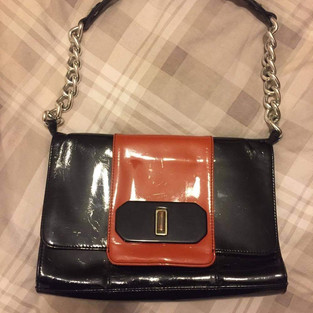


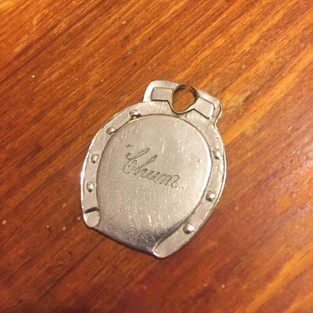


Human display the intriguing characteristic of making and using objects. The things which people interact are not simply tools for survival. Things embody goals, making skills manifest, and shape the identity of their users. To understand what people are and what they might become, one must understand what goes on between people and things. it is surprising how little we know about what things mean to people.


Comments